
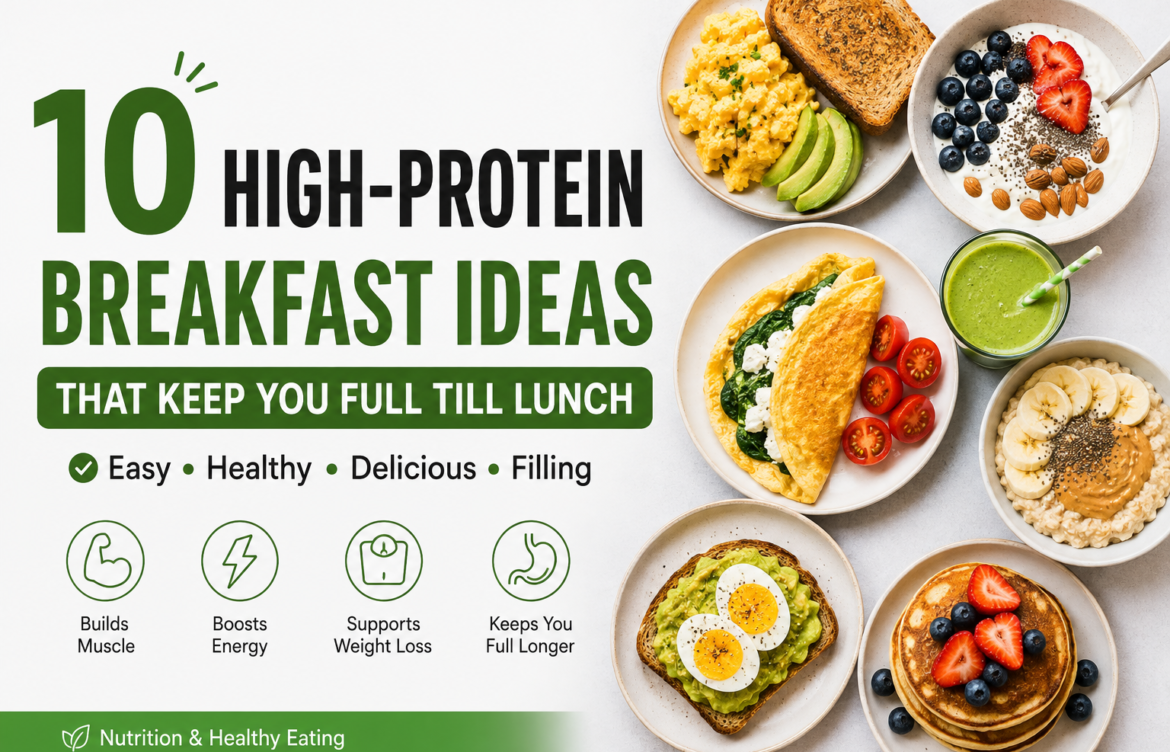
10 High-Protein Breakfast Ideas That Keep You Full Till Lunch
Starting your day with a protein-rich breakfast can make a big difference in how you feel throughout the morning. A breakfast with enough protein can help support muscle health, reduce mid-morning hunger, and keep you satisfied until lunchtime.
If you usually find yourself reaching for biscuits, sugary cereal, or snacks just a few hours after breakfast, it may be time to rethink your morning meal.
The good news? A high-protein breakfast doesn’t have to be complicated or boring. From creamy Greek yogurt bowls to savory egg wraps, there are plenty of delicious options that are quick, nutritious, and easy to prepare.
Here are 10 high-protein breakfast ideas that can help keep you full until lunch.
1. Greek Yogurt and Berry Protein Bowl
Greek yogurt is one of the easiest ways to add protein to your breakfast. Choose plain, unsweetened Greek yogurt and add fresh berries for natural sweetness.
What to add:
- 1 cup Greek yogurt
- Strawberries, blueberries, or raspberries
- 1 tablespoon chia seeds
- A small handful of almonds or walnuts
- Optional: a little honey
The combination of protein, healthy fats, and fiber makes this a satisfying breakfast that takes only a few minutes to prepare.
Protein boost: Choose Greek yogurt with a higher protein content and add nuts or seeds for even more protein.
2. Vegetable Omelet With Whole-Grain Toast
Eggs are a classic high-protein breakfast for a reason. They’re versatile, affordable, and easy to prepare.
Make an omelet with two or three eggs and add vegetables such as:
- Spinach
- Tomatoes
- Bell peppers
- Mushrooms
- Onions
Serve it with one slice of whole-grain toast for additional fiber and carbohydrates.
For extra protein, you can add cottage cheese or a small amount of shredded cheese to your omelet.
Why it works: Eggs provide protein and fat, while vegetables and whole-grain toast add fiber and nutrients.
3. Overnight Oats With Peanut Butter
Overnight oats are perfect if you don’t have much time in the morning. Simply prepare them the night before and keep them refrigerated.
Simple combination:
- ½ cup rolled oats
- ¾ cup milk
- ½ cup Greek yogurt
- 1 tablespoon natural peanut butter
- 1 tablespoon chia seeds
- Cinnamon
- Banana slices or berries
The Greek yogurt, peanut butter, milk, and chia seeds increase the protein content while oats provide slow-digesting carbohydrates and fiber.
Time-saving tip: Prepare two or three jars at once so you have breakfast ready for several mornings.
4. Cottage Cheese With Fruit and Nuts
Cottage cheese is a simple but powerful high-protein breakfast option. Its creamy texture pairs surprisingly well with both sweet and savory ingredients.
For a sweet version, combine cottage cheese with:
- Banana
- Berries
- Apple slices
- Walnuts
- Cinnamon
You can also choose a savory version with tomatoes, cucumber, black pepper, and whole-grain toast.
Why it works: Cottage cheese is naturally rich in protein, making it an excellent choice when your goal is a more filling breakfast.
5. Egg and Chicken Breakfast Wrap
If you prefer a savory breakfast, try a protein-packed breakfast wrap.
Fill a whole-grain tortilla with:
- 2 scrambled eggs
- Cooked chicken breast
- Spinach
- Tomatoes
- Bell peppers
- A small amount of cheese
Roll everything into a wrap and you’re ready to go.
This is especially useful for busy mornings because you can prepare the ingredients ahead of time.
Meal-prep idea: Cook several portions of chicken and chopped vegetables on the weekend and assemble your wraps throughout the week.
6. Protein Smoothie With Banana and Peanut Butter
A smoothie can be a convenient breakfast when you’re short on time. However, many smoothies are loaded with fruit but relatively low in protein.
Build yours around a protein source.
Try this combination:
- 1 cup milk
- 1 banana
- ½ cup Greek yogurt
- 1 tablespoon peanut butter
- 1 tablespoon chia seeds
- Cinnamon
- Optional protein powder
Blend until smooth.
The result is a creamy breakfast that combines protein, healthy fats, and carbohydrates.
Tip: If you’re trying to manage calories, be mindful of large amounts of peanut butter, honey, or other calorie-dense ingredients.
7. Avocado and Egg Whole-Grain Toast
Avocado toast becomes a much more satisfying breakfast when you add eggs.
Start with one slice of whole-grain toast and top it with mashed avocado and two eggs. Add tomatoes, spinach, chili flakes, or black pepper for extra flavor.
Why this combination is filling:
- Eggs: Protein
- Avocado: Healthy fats and fiber
- Whole-grain bread: Fiber and carbohydrates
This balance can help make breakfast more satisfying than toast or fruit alone.
8. High-Protein Breakfast Bowl
A breakfast bowl allows you to combine several nutritious foods in one meal.
Try building your bowl with:
- Scrambled eggs
- Black beans or chickpeas
- Spinach
- Tomatoes
- Avocado
- Whole-grain toast or a small serving of potatoes
You can season it with black pepper, paprika, chili flakes, or your favorite herbs.
This is a great option if you prefer a hearty breakfast and want a combination of protein, fiber, healthy fats, and complex carbohydrates.
9. Peanut Butter Banana Greek Yogurt Toast
Looking for something quick and slightly sweet? Try this simple combination.
Toast one slice of whole-grain bread and spread a thin layer of natural peanut butter on top. Add banana slices and serve it with a side of Greek yogurt.
You can sprinkle cinnamon or chia seeds on top for additional flavor and nutrients.
The protein comes from: Greek yogurt, peanut butter, and whole-grain bread.
It’s an easy breakfast for mornings when you don’t want to cook eggs.
10. High-Protein Breakfast Sandwich
A homemade breakfast sandwich can be much more nutritious than many packaged or fast-food alternatives.
Build your sandwich with:
- 2 eggs
- Whole-grain English muffin or bread
- Turkey or chicken slices
- Tomato
- Spinach
- A small amount of cheese
Toast the bread, cook the eggs, layer everything together, and enjoy.
For meal prep, you can prepare several sandwiches in advance and refrigerate them for quick breakfasts during the week.
How Much Protein Should You Eat at Breakfast?
There isn’t one perfect protein target that works for everyone. Your needs depend on factors such as your age, body size, activity level, overall diet, and health goals.
Instead of focusing only on a specific number, aim to include a meaningful protein source at breakfast.
Good choices include:
- Eggs
- Greek yogurt
- Cottage cheese
- Milk
- Chicken or turkey
- Beans and lentils
- Nuts and seeds
- Tofu
- Protein-rich whole grains
- Protein powder, when appropriate
Combining protein with fiber-rich foods and healthy fats can make your breakfast more satisfying.
How to Make Your Breakfast More Filling
A high-protein breakfast doesn’t have to mean eating a huge amount of food. Focus on building a balanced meal.
A simple formula is:
Protein + Fiber + Healthy Fat + Whole-Food Carbohydrates
For example:
Eggs + vegetables + avocado + whole-grain toast
or
Greek yogurt + berries + chia seeds + nuts
This approach gives your body a combination of nutrients instead of relying primarily on refined carbohydrates or added sugar.
Common Breakfast Mistakes That Can Leave You Hungry
Even if you eat breakfast every morning, certain choices may leave you hungry again quickly.
1. Eating mostly refined carbohydrates
Sugary cereal, pastries, white bread, and sweet breakfast bars may provide quick energy but often don’t contain enough protein or fiber to make a satisfying meal.
2. Skipping protein
A breakfast consisting mainly of fruit or toast may not provide enough protein to keep you satisfied.
3. Drinking your entire breakfast
Smoothies can be nutritious, but it’s easy to consume a large amount of calories quickly. Adding protein, fiber, and whole-food ingredients can make a smoothie more balanced.
4. Adding too much sugar
Honey, syrups, flavored yogurt, and sweetened cereals can quickly increase added sugar. Choose unsweetened ingredients when possible and use fruit for natural sweetness.
Can a High-Protein Breakfast Help With Weight Management?
A protein-rich breakfast can be part of a healthy weight-management strategy because protein is generally more satiating than carbohydrates or fat.
However, eating more protein alone doesn’t automatically cause weight loss. Your overall calorie intake, food quality, physical activity, sleep, and other lifestyle factors also matter.
The goal should be to build a balanced eating pattern that you can maintain over time.
Easy High-Protein Breakfast Meal-Prep Tips
If busy mornings make healthy eating difficult, preparation can help.
Prepare ingredients ahead of time: Boil eggs, cook chicken, wash fruit, and chop vegetables in advance.
Make overnight oats: Prepare several containers at once and store them in the refrigerator.
Keep protein-rich foods available: Greek yogurt, cottage cheese, eggs, milk, nuts, and seeds are convenient options.
Create breakfast combinations: Rotate between eggs, yogurt bowls, overnight oats, smoothies, and breakfast wraps to avoid getting bored.
Final Thoughts
A filling breakfast doesn’t need to be complicated. The key is to include a good source of protein and combine it with fiber-rich foods, healthy fats, and nutritious carbohydrates.
Whether you prefer eggs and avocado toast, Greek yogurt and berries, overnight oats, or a chicken breakfast wrap, there are plenty of delicious ways to start your day with more protein.
Try one or two of these breakfast ideas this week and find the options that fit your taste, schedule, and nutritional needs best.
Remember: A healthy breakfast is not about following a perfect recipe. It’s about choosing nutritious foods that help you feel energized and satisfied throughout your morning.
This article is for general educational purposes and is not a substitute for personalized medical or dietary advice.