
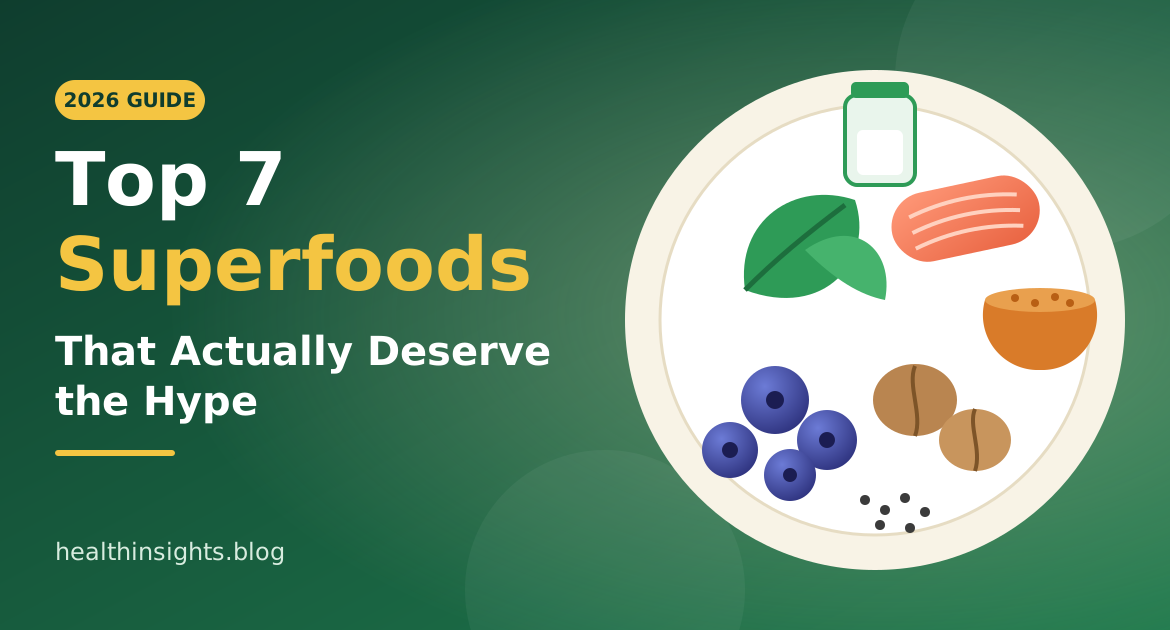
Best Superfoods to Eat Daily: Top 7 That Actually Deserve the Hype in 2026
Looking for the best superfoods to eat daily without falling for marketing tricks? Your social feed is full of miracle powders, green shots, and golden lattes, but “superfood” isn’t a scientific term, and no single food can undo a poor diet. A small group of foods does have solid research behind it, and they’re affordable and easy to find. This guide covers the seven best superfoods for 2026, plus a few that are more hype than help.
What Makes the Best Superfoods to Eat Daily?
There is no official scientific definition of a superfood. The word usually describes foods with an unusually strong nutrient profile, such as fibre, healthy fats, vitamins, or antioxidants. Researchers also point out that these foods work best as part of a varied, whole-food diet, not as a single fix. Evidence for disease prevention is often inconsistent because studies differ in length and dose. For balanced nutrition guidance, see Harvard’s Nutrition Source.
I chose the best superfoods to eat daily using three simple tests: they have credible research behind them, they are easy to eat every day, and they don’t cost a fortune.
- Blueberries: A Top Superfood for Brain Health
Blueberries get their deep colour from anthocyanins, plant compounds with antioxidant and anti-inflammatory effects. Research suggests regular intake may support brain function, slow age-related cognitive decline, and improve blood vessel function. A 2022 review in Food & Function, which you can find on PubMed, also found that blueberries may help with blood pressure and cholesterol.
How to eat them daily: Add a handful to oats or yogurt. Frozen blueberries are just as nutritious and much cheaper.
Reality check: Strawberries and blackberries offer similar benefits, so use whatever is in season.
- Fatty Fish (Salmon, Sardines, Mackerel): Best Superfoods for Heart and Brain
Fatty fish are among the best superfoods for heart and brain health. They provide omega-3 fats, especially DHA, which supports the structure and function of brain cells. They also offer high-quality protein, B vitamins, and selenium, which help with muscle repair, energy, and immune strength.
How to eat it: Aim for fish a couple of times a week. Canned sardines and mackerel are budget-friendly and just as nutritious.
- Leafy Greens (Spinach and Kale): Everyday Superfoods Packed With Nutrients
Spinach, kale, and similar greens are packed with vitamins, minerals, fibre, and antioxidants for very few calories. Kale gets the most attention, but there isn’t enough evidence to say it beats other cruciferous vegetables. Spinach, methi, and broccoli are excellent too.
How to eat them daily: Blend them into smoothies, stir them into curries and soups, or sauté them with garlic. Add a squeeze of lemon, because vitamin C improves iron absorption.
- Walnuts: A Heart-Healthy Superfood to Eat Daily
Walnuts are a plant source of omega-3 fats (ALA) and are often linked to heart and brain health. They offer healthy fats, fibre, and protein in a convenient, shelf-stable snack.
How to eat them: A small handful, about 1 ounce, is enough. Add them to salads, oatmeal, or homemade trail mix.
- Lentils and Beans: Everyday Superfoods for Blood Sugar
Lentils aren’t glamorous, but they are some of the best superfoods to eat daily. They’re rich in soluble fibre, protein, and iron. Soluble fibre helps stabilise blood sugar, which matters for preventing type 2 diabetes.
How to eat them: Daal, chana, rajma, and lentil soup all count. Soaking beans and lentils first reduces antinutrients, and pairing them with vitamin C foods improves iron absorption.
- Fermented Foods (Yogurt, Kefir, Kimchi): Superfoods for Gut Health
Fermented foods provide probiotics, and interest in the gut-brain connection keeps growing. Some research links regular fermented food intake with lower anxiety symptoms, though more studies are needed. Probiotics from foods like kimchi may also help reduce inflammation and support immunity.
How to eat them: Choose plain yogurt instead of sugary versions, or add a small serving of kimchi or other fermented vegetables to meals. If your digestion is sensitive, start with small portions.
- Chia Seeds: Tiny Superfoods, Big Fibre
Chia seeds are a good source of fibre, protein, and plant-based omega-3s (ALA). They absorb liquid and form a gel, which can aid digestion and fullness. Some research suggests they may help with post-meal blood sugar, though larger studies are still needed.
How to eat them: Make overnight chia pudding or stir a spoonful into oats or yogurt. Drink plenty of water with them.
Reality check: Cheaper seeds like flax or sesame offer similar benefits, so chia isn’t essential.
Overhyped Superfoods: What the Best Superfoods List Doesn’t Include
Not every trending food belongs on a list of the best superfoods to eat daily.
Turmeric: Curcumin makes up only about 3% to 5% of turmeric. Studies showing benefits for arthritis used extracts with around 1,000 mg of curcumin daily, far more than you’d get from curry. Black pepper can improve absorption, but turmeric’s superfood status isn’t proven yet. For supplement safety information, visit the NIH Office of Dietary Supplements.
Acai berries: In 2013 the US Federal Trade Commission fined acai marketers for misleading weight-loss claims.
“Activated” nuts: There’s no evidence they’re better for you.
Expensive powders and extracts: Whole foods generally outperform them. One study found that chia, flax, and sunflower seed extracts were less effective than whole seeds.
How to Add the Best Superfoods to Your Daily Diet
Eat the rainbow. Variety matters more than any single food.
Choose frozen or canned when needed. They’re often cheaper and still nutritious.
Keep it simple. A bowl of oats with blueberries, walnuts, and chia covers three superfoods in one meal.
Look at your whole lifestyle. Sleep, stress, and movement matter just as much as food. Read our guide on how chronic stress silently damages your body, try this 5-minute morning mindfulness routine, or learn the best breathing techniques for instant calm. You can find more wellness tips on our health blog.
FAQs About the Best Superfoods to Eat Daily
Are the best superfoods worth the money?
Often not the expensive ones. Everyday options like lentils, frozen berries, and canned fish deliver great value.
Can superfoods cure diseases?
No. They support overall health, but they aren’t a cure or a substitute for medical care.
How many superfoods should I eat daily?
There’s no set number. Aim for variety across the week, and include one or two of the best superfoods to eat daily in each meal.
Which superfood is best for brain health?
Blueberries and fatty fish have the most research linking them to brain health.
Is a superfood diet enough to stay healthy?
No. Superfoods help most when combined with balanced meals, regular movement, good sleep, and stress management.