
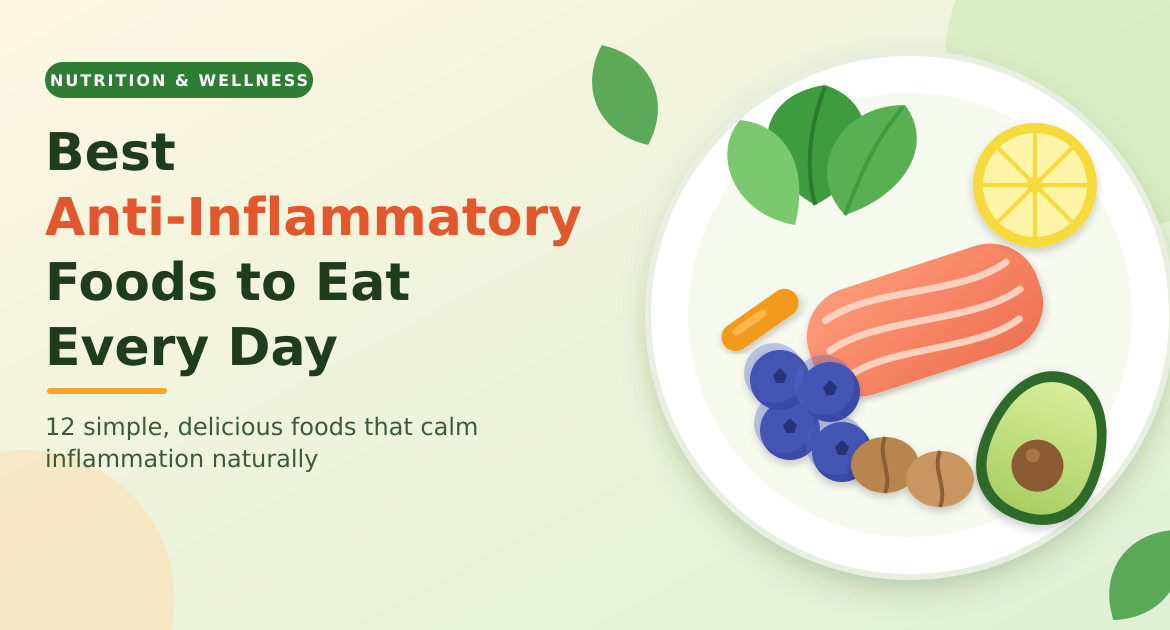
Anti-Inflammatory Foods: 12 Best Foods to Eat Every Day
Anti-inflammatory foods are one of the simplest ways to calm your body, protect your heart and keep your energy steady. You don’t need an expensive plan or hard-to-find ingredients. In this guide, you’ll discover 12 of the best anti-inflammatory foods to eat every day, a sample daily menu, and the foods worth limiting.
Why Inflammation Deserves Your Attention
Inflammation is your body’s natural defense system. When you cut your finger or catch a cold, it rushes in to protect and heal you. That’s the good kind.
The trouble starts when inflammation lingers at a low level for months or years. This chronic inflammation is linked to heart disease, type 2 diabetes, joint pain, and other long-term health problems. Chronic stress, poor sleep, smoking, and inactivity all contribute, but so does what’s on your plate. Harvard Health also has a helpful overview of how your diet can reduce chronic inflammation.
The good news is that you don’t need an extreme diet or expensive supplements. Adding the right anti-inflammatory foods to your daily routine can make a real difference.
12 Anti-Inflammatory Foods to Add to Your Daily Menu
1. Berries: Small Fruits, Big Benefits
Blueberries, strawberries, raspberries, and blackberries are rich in anthocyanins, plant compounds that help fight oxidative stress and inflammation.
Easy tip: Stir a handful into oatmeal or yogurt, or enjoy them as an afternoon snack.
2. Fatty Fish: Your Omega-3 Powerhouse
Salmon, sardines, mackerel, and trout provide omega-3 fatty acids (EPA and DHA), which are well studied for supporting heart health and helping regulate inflammation.
Easy tip: Aim for two servings per week. Grilled or baked is better than deep-fried.
3. Leafy Greens: Nature’s Daily Multivitamin
Spinach, kale, fenugreek (methi), and mustard greens (sarson) are packed with vitamins C and K, antioxidants, and fiber.
Easy tip: Add a handful to omelets, soups, curries, or smoothies.
4. Extra Virgin Olive Oil: Liquid Gold
A staple of the Mediterranean diet, extra virgin olive oil contains oleocanthal, a compound with anti-inflammatory properties, along with healthy monounsaturated fats.
Easy tip: Drizzle it over salads and cooked vegetables, or use it for light sautéing.
5. Nuts: Crunch with a Purpose
Walnuts, almonds, and pistachios offer healthy fats, fiber, and antioxidants. Walnuts are especially notable for their plant-based omega-3 (ALA).
Easy tip: A small handful (about 30 g) makes a satisfying snack that keeps you full.
6. Turmeric (Haldi) and Black Pepper: A Classic Duo
Turmeric contains curcumin, a compound studied for its anti-inflammatory effects. Black pepper contains piperine, which can improve curcumin absorption.
Easy tip: Add both to lentils, vegetables, rice, or a warm “golden milk” before bed.
7. Ginger and Garlic: Flavor That Heals
Both have been used in traditional kitchens for centuries, and modern research suggests they contain compounds that support the body’s anti-inflammatory response.
Easy tip: Use them fresh in curries, stir-fries, teas, and soups.
8. Green Tea: A Soothing Daily Ritual
Green tea is rich in EGCG, a powerful antioxidant. Swapping a sugary drink for a cup or two of green tea is a small change with a big payoff.
Easy tip: Skip the sugar, or add a slice of lemon or a few mint leaves.
9. Tomatoes: The Lycopene Champions
Tomatoes are loaded with lycopene, an antioxidant that becomes easier for your body to absorb when tomatoes are cooked with a little healthy fat.
Easy tip: Cook them in olive oil for sauces, soups, and stews.
10. Legumes and Lentils: Fiber-Rich and Budget-Friendly
Chickpeas, lentils (daal), kidney beans, and black beans provide fiber, plant protein, and polyphenols that feed your beneficial gut bacteria, and a healthy gut is closely tied to lower inflammation.
Easy tip: Make daal or chana a regular part of your weekly meals. They are some of the most affordable anti-inflammatory foods you can find.
11. Whole Grains: Choose Slow, Steady Energy
Oats, brown rice, barley, and whole-wheat roti are rich in fiber, which helps stabilize blood sugar and supports a healthy gut. Refined grains, by contrast, can spike blood sugar and may encourage inflammation.
Easy tip: Swap refined flour for whole-wheat or multigrain options where you can.
12. Dark Chocolate: A Treat That Loves You Back
Chocolate with 70% cocoa or higher contains flavonoids that support heart health and may help reduce inflammation.
Easy tip: One or two small squares is plenty. Moderation is the key.
A Sample Day of Anti-Inflammatory Foods
Here is how you can fit these anti-inflammatory foods into one simple day:
| Meal | Idea |
|---|---|
| Breakfast | Oatmeal topped with blueberries, walnuts, and a pinch of cinnamon |
| Mid-morning | Green tea and a small handful of almonds |
| Lunch | Lentil daal with sautéed spinach, brown rice, and a side salad with olive oil |
| Snack | Fresh fruit or hummus with cucumber and carrot sticks |
| Dinner | Baked salmon with roasted vegetables and a turmeric-ginger sauce |
| Evening | Warm golden milk or a square of dark chocolate |
Foods to Limit
Eating more anti-inflammatory foods works best when you also cut back on foods that may fuel inflammation:
- Sugary drinks and sweets
- Refined carbohydrates such as white bread and pastries
- Processed and packaged meats
- Deep-fried foods and trans fats
- Excess alcohol
You don’t have to eliminate them completely. Simply make them the exception rather than the rule.
Beyond the Plate: Habits That Boost the Effect
Food is powerful, but it works best alongside a healthy lifestyle:
- Move daily. Even a 30-minute brisk walk helps.
- Sleep well. Aim for 7 to 9 hours.
- Manage stress. Try breathing techniques, a 5-minute morning mindfulness routine, prayer, or time outdoors.
- Stay hydrated. Water supports every system in your body.